If you run a clothing brand in the UK, print size matters more than most people think. I see this every day at Wise DTF Prints. A design can look sharp on screen, yet feel too small or too large on fabric. That mistake costs time, money, and brand trust.
In this guide, I will share the best DTF transfer sizes based on real jobs I print for UK brands. I will keep it clear and simple. You will learn which sizes work for t-shirts, hoodies, sleeves, and large back prints. You will also see how to choose the right sheet size for your order.
Let’s get straight to it.
Why DTF Transfer Size Is So Important for Clothing Brands
Print size shapes how customers see your brand. A logo that sits too low looks careless. A chest print that feels too wide looks cheap.
Good sizing helps you:
Keep brand balance
Improve garment fit
Reduce print waste
Increase customer trust
Avoid costly reprints
When I work with new UK start-ups, the first issue is often sizing. They focus on artwork, but forget the custom apparel print dimensions. Once we fix that, their garments look more premium.
Standard DTF Sheet Sizes Used in the UK
Before we talk about placement, we need to understand standard DTF sheet sizes.
Here are the most common ones I print:
A5, Small logo prints
A4, Medium chest prints
A3, Large front or back prints
58cm x 100cm rolls, Large format designs
Metre rolls, Bulk production
For example, if you need smaller branding, you can use an A5 DTF transfer sheet from our product range. For larger prints, many brands choose our A3 DTF transfer sheet. Choosing between A4 vs A3 DTF sheet size depends on your design width and garment type. I will explain this clearly below.
Best DTF Transfer Sizes for T-Shirts
T-shirts are the most common garment I print in the UK. So let’s start here.
1. Ideal Print Size for T-Shirts (Adult)
For standard adult tees:
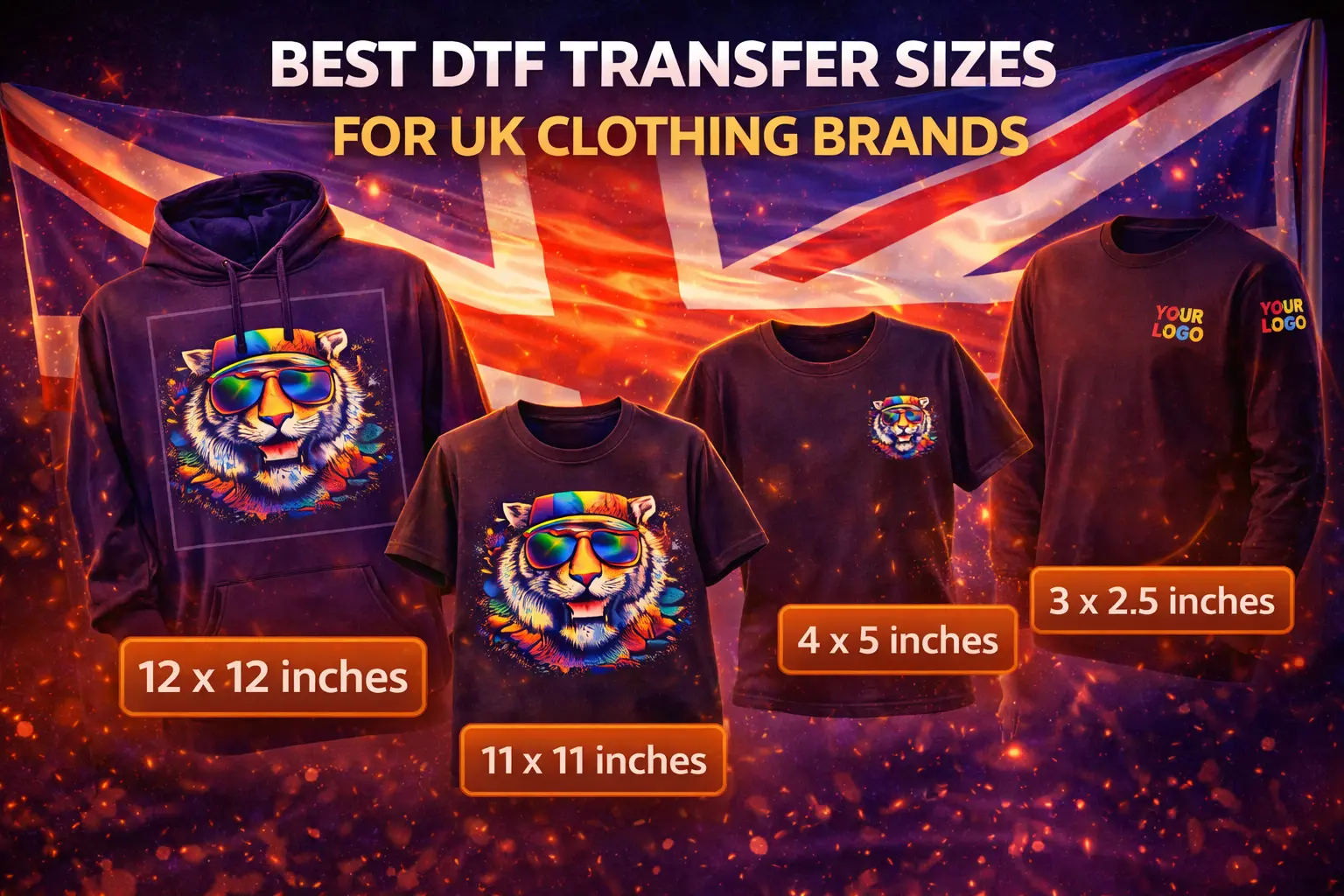
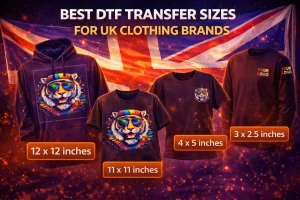
Small chest logo: 8 to 10 cm wide
Medium chest print: 20 to 25 cm wide
Large front print: 28 to 32 cm wide
Full back print: 30 to 35 cm wide
These chest print dimensions work well across S to XL sizes. For 2XL and above, I increase the width slightly. If your brand uses streetwear-style graphics, you may follow the trend of oversized prints. In that case, front prints can go up to 35 cm wide. Still, balance is key. A large graphic should not sit too high or too low.
2. Small Logo Print Size for Minimal Brands
Minimal fashion brands in London and Manchester often use small logo sizes.
The sweet spot:
8 cm wide for the left chest
10 cm wide for bold logos
This fits perfectly on A5 sheets. If you want to order ready prints, you can check our DTF transfers and choose smaller formats.
Small logos work well for:
Gym wear
Corporate uniforms
Premium cotton tees
Polo shirts
Keep spacing clean. Leave at least 7 cm from the collar seam.
Hoodie Print Size Chart, What Works Best
Hoodies require different thinking. Fabric weight and pocket area change placement.
Here is my simple hoodie print size chart:
Front Chest Prints
Small logo: 8 to 10 cm
Mid-size print: 22 to 26 cm
Full Front Prints
28 to 32 cm wide
Back Prints
30 to 35 cm wide
Back print size guide tip: Start 5 cm below the hood seam. This keeps the print visible when the hood rests down. For streetwear brands, I often print large-format DTF transfers on hoodies. Bigger graphics create stronger shelf appeal.
Sleeve Print Measurements for UK Brands
Sleeve prints are popular for brand slogans and web addresses. Standard sleeve print measurements:
Width: 5 to 8 cm
Height: 20 to 28 cm
I always suggest long vertical designs for sleeves. They follow the arm shape better. Avoid placing prints too close to cuffs. Leave at least 3 cm space.
Logo Placement Sizing, Front, Back and More
Correct logo placement and sizing give your clothing a retail feel.
Here is a simple breakdown:
Left Chest Placement
7 to 10 cm below the collar
8 to 10 cm width
Centre Chest Placement
10 to 12 cm below the collar
20 to 30 cm width
Upper Back Placement
5 cm below the collar seam
25 to 30 cm width
Lower Back Placement
10 to 15 cm below the collar
30 to 35 cm width
Good apparel branding placement keeps your logo visible without looking forced.
Back Print Size Guide for Statement Designs
Back prints give brands more space to tell a story. I print many large back graphics for UK streetwear labels.
Recommended sizes:
Medium back: 28 to 30 cm
Large back: 30 to 35 cm
Oversized back: 35 to 40 cm
For larger jobs, I suggest DTF transfers in large format. These work well on oversized tees and hoodies. If you run bulk production, consider our custom metre DTF transfer roll. This helps you scale without running out of film mid-run.
A4 vs A3 DTF Sheet Size, Which Should You Choose?
This is a common question.
Choose A4 If:
You print chest logos
You need medium centre prints
You want a lower cost per design
Choose A3 If:
You print large back designs
You follow the oversized print trend
You need bold front graphics
Many new brands start with A4. As they grow, they move to A3 for impact. If you are unsure, visit our Shop and compare sheet options. The size difference becomes clear when you look at the dimensions.
Gang Sheet Size Optimisation, Save Money Smartly
Gang sheet size optimisation helps you fit multiple designs onto a single sheet.
For example:
4 small logos on one A4
2 chest prints on one A3
Mixed sleeve and chest prints on roll film
I always tell brands: plan layout before printing. This reduces waste and boosts margin. You can build layouts using our Build Your Own DTF Gang Sheets option. These are start-ups and bulk sellers.
Large Format DTF Transfers for Scaling Brands
If you run at a serious volume, sheet sizes may slow you down.
In that case, I suggest:
25 metre roll
50 metre roll
75 metre roll
100 metre roll
These help brands produce hundreds of garments weekly. For wholesale clients, our buy wholesale DTF transfers offers high-capacity options for scaling operations.
Real Advice from My Experience
I have printed for UK gym brands, school leavers, small fashion labels, and online stores.
Here is what I learned:
Always test one sample before a bulk run.
Adjust size for XS and 3XL separately.
Measure garment width before finalising artwork.
Think about fabric stretch.
Avoid mindlessly copying another brand’s size.
Each brand has its own identity. Print size must match that identity.
How Print Size Affects Brand Image
Small prints feel premium and subtle. Large prints feel bold and loud. Sleeve prints feel sporty. Back prints feel expressive. Your target audience decides your size choice.
For example:
Corporate wear → smaller logos
Streetwear → larger graphics
Kids wear → scaled-down prints
Clear sizing builds trust. Random sizing breaks it.
Common Mistakes UK Brands Make
I see these often:
Using the same size for all garment sizes
Ignoring the hoodie pocket space
Printing too close to the collar
Choosing the wrong sheet size
Skipping test press
Fixing these saves money long term.
Quick Reference
Here is a simple DTF transfer size guide:
T-Shirts
Small logo: 8 to 10 cm
Medium chest: 20 to 25 cm
Large front: 28 to 32 cm
Back: 30 to 35 cm
Hoodies
Chest: 22 to 26 cm
Back: 30 to 35 cm
Sleeves
5 to 8 cm wide
20 to 28 cm tall
Use this as a base, then adjust by garment fit.
Final Thoughts
Print size is not random. It shapes how your brand feels in the hand. At Wise DTF Prints, I guide brands daily on the dimensions for custom apparel printing. I help them choose between A4 and A3 DTF sheet sizes, plan gang sheet size optimisation, and select the right roll film for the scale. Your design deserves the right size. And the right size builds a strong brand.
Read more: How to Choose the Best DTF Printing Service Near You.
Frequently Asked Questions (FAQs)
What is the best DTF transfer size for most UK t-shirt brands?
For most adult t-shirts, the ideal print size is 20 to 25 cm wide for a centre chest design. If you want a bold streetwear look, you can increase it to 28 to 32 cm. For small branding, an 8 to 10 cm logo print size works best on the left chest. Always test one sample before bulk production.
Should I choose A4 or A3 DTF sheet size for my clothing brand?
Choose A4 if you mainly print chest logos or medium front designs. It keeps costs lower and suits start-ups. Choose A3 if you need large front graphics or back prints. When comparing A4 vs A3 DTF sheet sizes, consider your design width first, not just sheet cost.
How do I decide the correct back and sleeve print dimensions?
For back prints, follow a simple back print size guide: 30 to 35 cm wide suits most adult garments. For sleeves, use a width of 5 to 8 cm and a height of 20 to 28 cm. Keep enough space from seams and cuffs. Good logo placement and sizing keep your apparel branding placement clean and professional.