When someone looks at a printed t-shirt, their brain reacts in seconds. That first glance decides if they like it or not. I have seen this many times while working with clients at Wise DTF Prints. Many people think price matters first. It does not. The first impression of custom t-shirts always comes from what the eye sees. Let me walk you through what truly grabs attention and how you can use it to your advantage.
Why First Impressions Matter in Custom T-Shirts
When a customer sees a t-shirt, they do not read the details first. They react to visuals. This is where the custom apparel first impression plays a key role. In my experience, customers decide within 3 to 5 seconds:
“This looks good”
or “This is not for me”
That quick decision comes from:
Colour
Design placement
Print sharpness
Fabric look
If these fail, the sale is already lost.
1. Design: The First Thing the Eye Catches
The design is the heart of the t-shirt. It creates the t-shirt design impact instantly. A strong design answers one question fast: “Does this look interesting?”
What makes a design stand out:
Clear and bold graphics
Easy-to-read text
Balanced spacing
Strong contrast
I always tell my clients: If someone cannot understand your design in 2 seconds, it needs fixing. This directly affects garment design attractiveness and clothing design appeal.
2. Print Quality: The Silent Deal Breaker
Next comes print quality. This shapes the custom print quality perception. Customers may not know printing terms, but they notice quality fast.
They check:
Is the print sharp?
Are colours bright?
Does it look durable?
Poor print leads to instant rejection. That is why I always recommend high-quality transfers like those from our Wise DTF Prints range.
If you want reliable options, you can explore:
For clean and sharp results on smaller designs, you can use high-quality A4 DTF transfer sheets that give crisp and detailed prints.
If you need bigger designs with stronger detail and better coverage, go for larger A3 DTF transfer sheets built for bold prints.
This improves print quality evaluation and builds trust.
3. Colour Combination and Contrast
Colour creates emotional impact. It drives apparel visual appeal. A dull colour scheme makes even a good design look weak.
Strong colour use helps with:
Better print design visibility
Higher customer attention in apparel
Stronger brand recall
Simple rule I follow:
Dark shirt → use bright print
Light shirt → use bold dark print
This keeps the t-shirt aesthetics clean and effective.
4. Placement of the Design
Even a great design can fail if placed badly. Customers always notice placement without thinking about it.
Correct placement improves:
apparel presentation quality
Overall balance
Professional look
Common winning placements:
Centre chest
Left chest logo
Full back print
Bad placement reduces customer perception of printed shirts, even if the design is good.
5. Fabric Look and Feel (Yes, It Shows Visually)
Even before touching, customers judge fabric.
They look for:
Smooth surface
Clean stitching
No wrinkles
A poor fabric look reduces trust in print quality, too. That is why I always suggest pairing good prints with quality garments.
6. Branding and Message Clarity
People love meaning. A clear message improves visual branding on t-shirts.
Customers ask:
What does this shirt say?
Does it match my style?
If your message is confusing, interest drops fast. Clear branding improves:
Trust
Recall
Purchase intent
7. Overall Balance and Clean Finish
Everything must work together.
This includes:
Design
Print
Colour
Placement
When all elements align, you get a strong clothing design appeal. Customers may not explain it, but they feel it. That feeling drives buying decisions.
How I Help Clients Improve First Impressions
At Wise DTF Prints, I guide clients to improve every detail. If you are starting or scaling, I suggest:
If you want to explore all available options, you can browse our full collection of DTF products in the shop.
If you’re ready to get started, you can order custom DTF transfers directly from here based on your design needs.
For bulk printing projects, many of my clients prefer using custom gang sheets for better efficiency and cost savings.
These help maintain consistent apparel presentation quality across products.
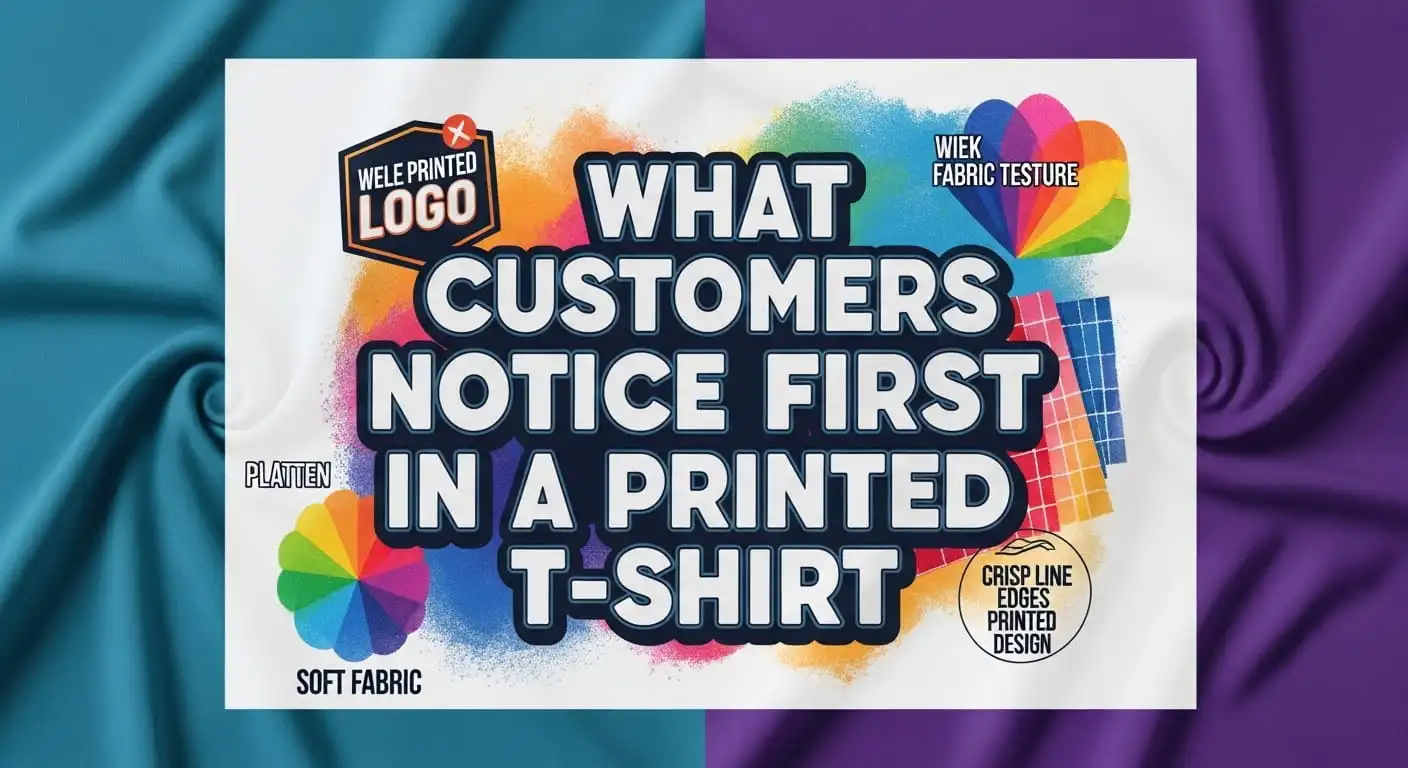
Quick Checklist: What Customers Notice First
Here is a simple checklist you can follow:
Is the design clear in 2 seconds?
Are colours strong and visible?
Does the print look sharp and clean?
Is the placement balanced?
Does the shirt look high-quality?
If you answer “yes” to all, your t-shirt is ready to sell.
Final Thoughts (From My Experience)
After years in printing, I can say one thing clearly: People buy what looks good first. They do not start with technical details. They react to visuals.
Focus on:
Strong design
Clean print
Good colour use
Proper placement
This builds a powerful custom apparel first impression. And once you win that first second, you win the customer.
Read more: What Happens If You Overheat a DTF Transfer?
Frequently Asked Questions
What do customers notice first in a printed t-shirt?
Customers notice the design first. The colours, layout, and overall look create the first impression. A clear and bold design improves customer attention and makes the t-shirt more appealing.
How does print quality affect customer perception of printed shirts?
Print quality plays a big role in trust. Sharp prints with bright colours show good quality. Poor prints look dull and can make the shirt feel cheap, even if the design is good.
Which is better for detailed prints, A4 or A3 DTF transfer sheets?
A4 DTF transfer sheets work well for small and clean designs. A3 DTF transfer sheets are better for larger prints with more detail and a stronger visual impact.