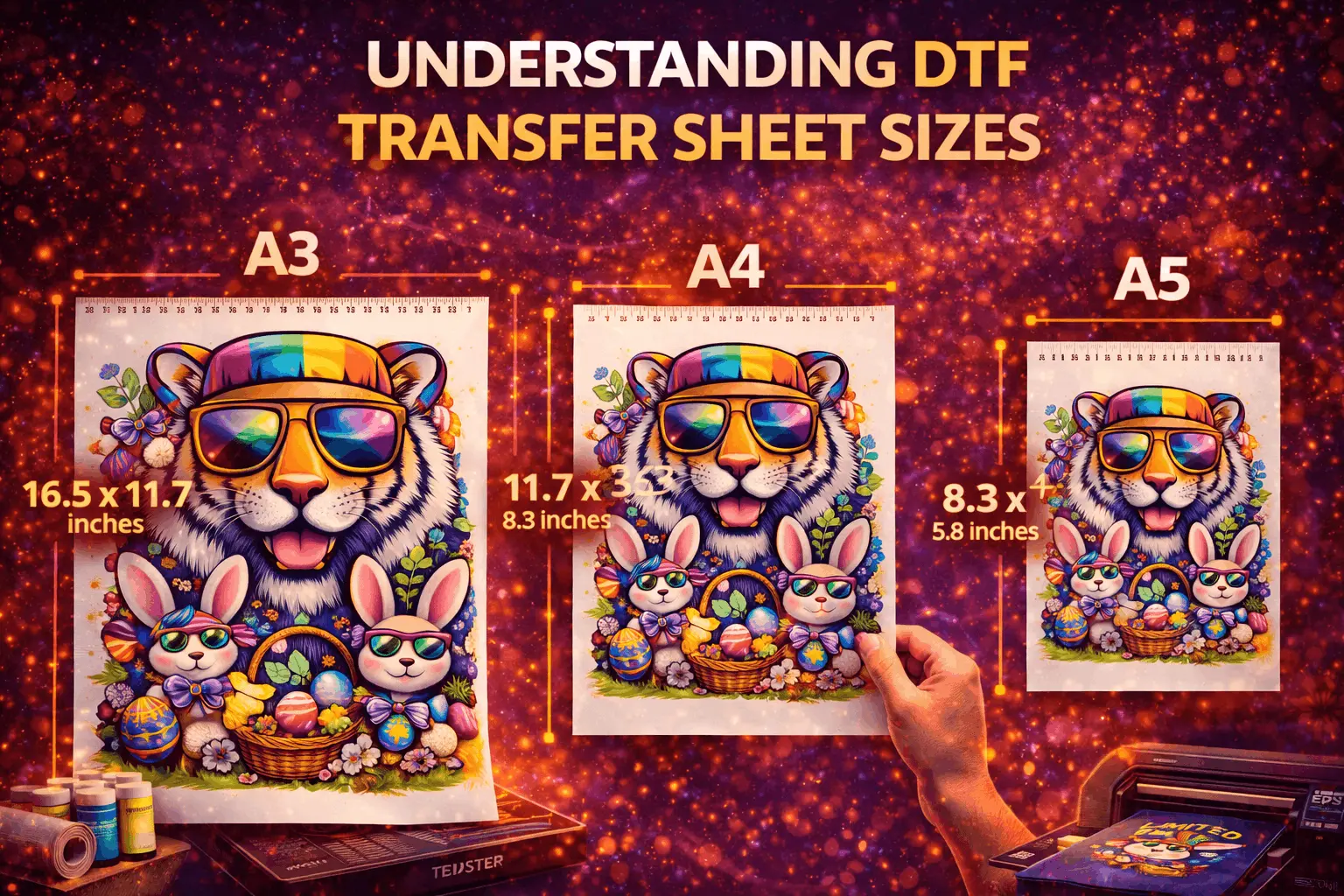
When people start using DTF printing, they often focus on colours, inks, and fabrics. Yet one detail changes the whole result: DTF transfer sheet sizes. I run Wise DTF Printsand I speak with customers every week. Many ask the same question: Which sheet size should I use? A designer may print a logo on a chest. Another prints large artwork on a hoodie. Each job needs a different sheet.
So in this guide, I will explain the A3, A4, and A5 sizes, how they compare, and when each size works best. If you run a print shop or create custom clothing, this simple DTF print size guide will help you choose with confidence.
What Are Standard DTF Printing Sheets?
DTF printing uses special film sheets that hold the printed design before heat pressing it onto fabric.
These sheets come in several heat transfer sheet sizes. However, most print shops rely on three common options:
- A3 sheets
- A4 sheets
- A5 sheets
These sizes follow the same paper size standards used worldwide. Because of that, they fit easily into most printers and layout software.
Each sheet offers a different space for artwork. Therefore, understanding DTF sheet dimensions helps you avoid wasted material and poor placement.
Understanding DTF Sheet Dimensions
Before choosing a sheet, it helps to know the exact measurements.
A3 DTF Sheet
- Dimensions: 297 mm × 420 mm
- Best for: Large prints, hoodies, jackets
A4 DTF Sheet
- Dimensions: 210 mm × 297 mm
- Best for: Medium chest designs, logos
A5 DTF Sheet
- Dimensions: 148 mm × 210 mm
- Best for: Small graphics, sleeve prints
These three options form the core of most standard DTF printing sheets used in garment decoration. The right sheet size keeps the print clear and balanced on the clothing.
Transfer Sheet Size Comparison: A3 vs A4 vs A5
Let’s look at a clear transfer sheet size comparison.
| Sheet Size | Print Area | Best Use |
| A3 | Large | Hoodie fronts, large artwork |
| A4 | Medium | T-shirt chest prints |
| A5 | Small | Sleeve prints, small logos |
Many beginners pick the wrong size and waste space on the film. For example, printing a small logo on an A3 sheet wastes material. A5 would work better. So, choosing the right DTF design placement sizes improves both quality and cost.
A3 DTF Transfer Sheets: Best for Large Designs
Large designs need more print space. That is where A3 sheets perform well. I often suggest A3 when customers print:
- Hoodie front artwork
- Oversized streetwear graphics
- Back prints on jackets
- Large event designs
An A3 sheet gives enough room for detailed artwork. It also works well for DTF gang sheet sizing when several designs share one sheet. If you need professional A3 transfers, you can see our custom A3 heat transfer sheets. Many UK clothing brands use this size because it supports larger apparel print layout sizes without cutting designs.
A4 DTF Transfer Sheets: The Most Popular Choice
In my experience, A4 sheets are the most requested size. They balance space, cost, and flexibility.
Designers often use A4 for:
- Chest prints on T-shirts
- Brand logos
- Medium artwork
- Event merchandise
Because of this balance, many beginners start with A4 while learning choosing the right DTF sheet size. If you want to see an example, our A4 custom transfer sheet works well for everyday printing: Many clothing start-ups in the UK choose A4 because it matches the typical garment print size guide for T-shirts.
A5 DTF Transfer Sheets: Perfect for Small Graphics
Small designs need smaller film sheets. That is where A5 sheets shine.
I usually recommend A5 for:
- Sleeve prints
- Pocket logos
- Hat graphics
- Kids’ clothing prints
Using an A5 sheet prevents wasted space and reduces print costs. For small jobs, you can check our A5 custom transfer sheets. Many clothing brands use A5 for branding details that support the main design.
How to Choose the Right DTF Sheet Size
Many people ask me how to decide between sizes. The answer depends on the design and garment. Here is a simple method I often share.
1. Check the Design Dimensions
Measure the width and height of the artwork first. Large artwork works best on A3.
2. Consider Garment Type
Different clothing items need different DTF design placement sizes.
Examples:
- T-shirt chest: A4
- Hoodie back: A3
- Sleeve logo: A5
3. Avoid Empty Space
A sheet that is too large wastes film. So, always match the artwork to the closest sheet.
4. Plan Multiple Designs
If several small graphics exist, use DTF gang sheet sizing. That way, you fill one sheet with multiple designs.
Understanding DTF Gang Sheet Sizing
A gang sheet allows you to place many designs on one large sheet. This method helps print shops reduce waste and increase efficiency.
For example:
- Five small logos can fit on one A3 sheet
- Three medium graphics can fit on one A4 sheet
Many print businesses rely on gang sheets for bulk orders. If you want to build your own layout, you can create custom gang sheets. This method saves time and lowers material costs.
Apparel Print Layout Sizes for Different Garments
Different clothing items follow common apparel print layout sizes. Here are some typical examples.
T-Shirts
Front chest designs usually measure:
- 10 to 12 inches wide
An A4 sheet usually fits this size well.
Hoodies
Back graphics often measure:
- 12 to 14 inches wide
A3 works best here.
Kids Clothing
Smaller garments need smaller prints. So A5 works well for these items. Understanding these garment print size guide standards helps maintain balance on the clothing.
Real Printing Example from My Workshop
Let me share a quick example from a recent order. A clothing brand asked for 60 T-shirts with a small chest logo. At first, they planned to print each logo on an A3 sheet. That would waste most of the film. Instead, we arranged several logos on one sheet using DTF gang sheet sizing.
The result:
- Less material used
- Faster printing
- Lower cost
This small change improved the whole job. That is why understanding DTF transfer sheet sizes helps every print shop.
Common Mistakes When Choosing DTF Sheet Sizes
Many beginners repeat the same mistakes. Here are the most common ones I see.
Using Oversized Sheets
Large sheets waste material if the design is small.
Ignoring Garment Proportions
A design may look great on screen but too large on the shirt.
Skipping Layout Planning
Without planning DTF design placement sizes, prints may look unbalanced.
Not Using Gang Sheets
Multiple designs should share one sheet when possible. Avoiding these mistakes saves both time and money.
Where to Order High-Quality DTF Transfers
Reliable transfers always improve printing quality. From my experience running WiseDTFPrints, good film and correct sizing make a clear difference in final prints. If you want to explore our services, you can visit the Wise DTF Prints where I share information about our DTF printing solutions.
Many clothing brands also browse our DTF transfers shop to see the full range of sheets and printing films available for garment decoration.
If you already have artwork ready, you can directly buy ready-to-press DTF transferswhich arrive prepared for heat pressing on T-shirts, hoodies, and other fabrics.
For larger businesses and clothing brands producing bulk orders, we also provide wholesale DTF transferswhich help reduce costs while maintaining consistent print quality.
At WiseDTFPrints, we supply A3, A4, A5 sheets, gang sheets, and roll film options, so print shops can choose the format that best suits their production workflow.
Our aim stays simple: help clothing brands create clean, sharp prints without wasting transfer film.
Final Thoughts
Choosing the correct DTF transfer sheet sizes may seem small, yet it shapes the entire print result.
A quick recap:
- A3 sheets suit large graphics and hoodie prints
- A4 sheets work best for standard T-shirt designs
- A5 sheets fit small logos and sleeve prints
Once you understand DTF sheet dimensions, planning layouts becomes much easier. Many successful clothing brands rely on this knowledge to control costs and maintain clean design placement.
If you print garments regularly, take time to plan your heat transfer sheet sizes carefully. A small adjustment in sheet size can improve the entire print process. And from my experience at Wise DTF Prints, that small step often makes the biggest difference.
Read more: How to Create Limited Edition Easter Apparel with DTF
Frequently Asked Questions
1. What are the most common DTF transfer sheet sizes?
The most common DTF transfer sheet sizes are A3, A4, and A5. Each size suits different garment prints, from large hoodie graphics to medium chest designs and small logos.
2. How do I choose the right DTF sheet size for my design?
Choose a DTF sheet size based on design dimensions and garment type. Large artwork fits A3 sheets, standard chest prints use A4, while smaller graphics work best on A5.
3. Can multiple designs be printed on one DTF sheet?
Yes, you can place multiple designs on one sheet using gang sheet layouts. This method saves film, improves printing efficiency, and helps print shops manage bulk garment orders.