DTF Printing vs Vinyl Printing – Simple Comparison
If you print T-shirts or plan to start, you have likely asked this question: DTF printing vs vinyl printing –

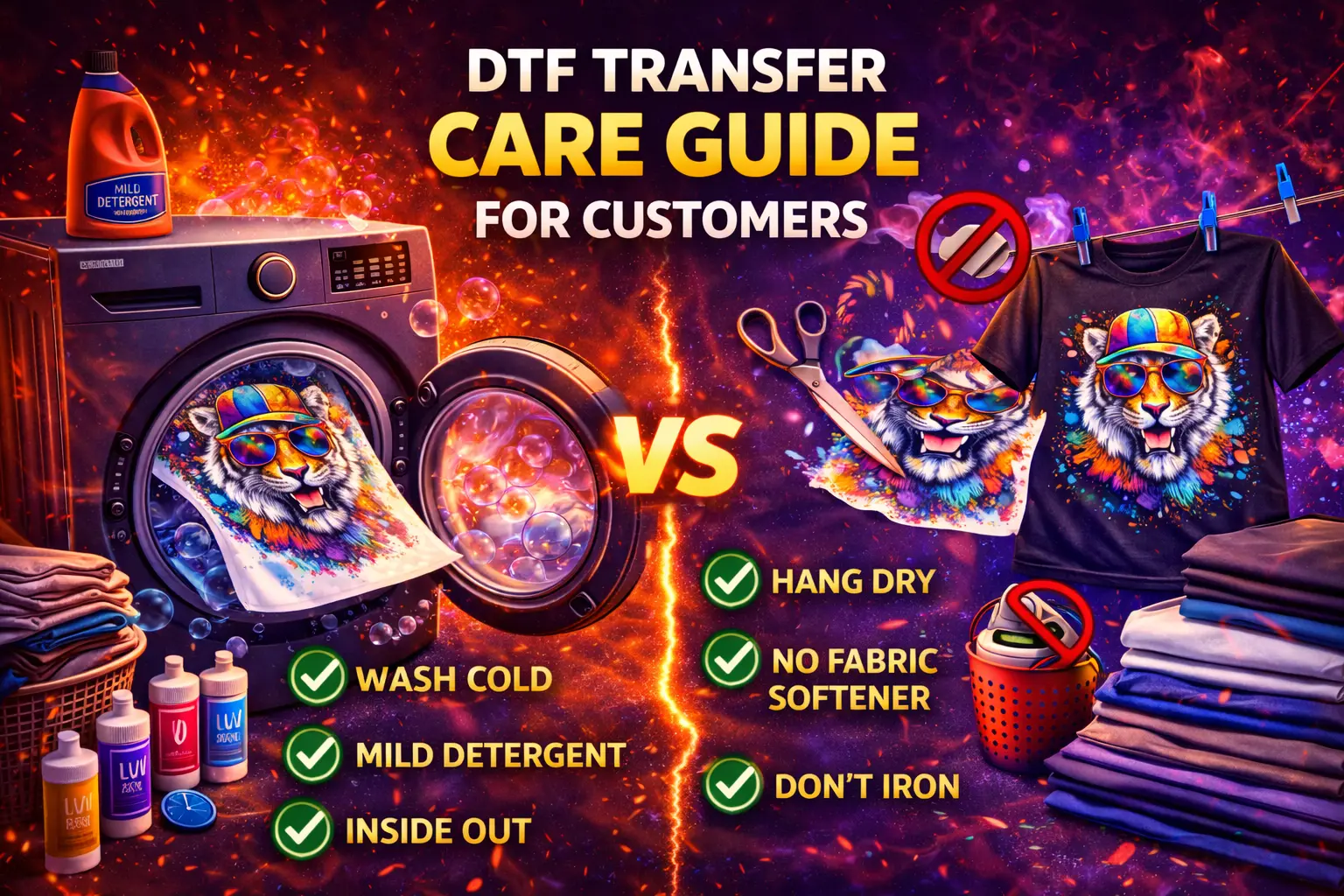
Suppose you buy DTF transfers or wear DTF-printed clothing; proper care matters. Good care keeps prints bright, soft, and strong for daily use. I am Shumail Ahmed, founder of Wisedtfprints.com. I work with DTF prints every day across the UK. In this guide, I will share transparent, honest care advice based on real-world experience, not theory.
This blog answers common questions customers ask after pressing the DTF transfer button. If you follow these steps, your prints will last longer and look better.
DTF prints sit on the fabric surface. They bond using heat, pressure, and adhesive powder.
Good care helps with:
Poor care shortens print life. Simple habits make a big difference.
DTF stands for Direct to Film. The design transfers from film to fabric using heat.
DTF works well on:
This makes it ideal for everyday wear clothing.
Still, every printed garment needs care. Ignoring care steps leads to early damage.
Post-press curing matters more than people think.
After pressing:
This step improves:
Skipping curing reduces wash durability.
Here is a simple summary before we go deeper.
These DTF print care instructions work for all garments.
Washing causes most print damage. Follow this DTF transfer washing guide carefully.
Always wash inside out. This protects the print from friction.
Less rubbing means:
This rule applies to all DTF printed garments.
Hot water weakens the adhesive. Cold water keeps prints stable.
Set your machine to:
Cold washing improves DTF transfer longevity.
Strong chemicals harm prints. Use mild detergent without bleach.
Avoid:
This step supports fabric care and print strength.
Wash DTF prints with soft items. Avoid zips, towels, or heavy denim. Hard surfaces cause abrasion. That reduces abrasion resistance over time.
Wash only when needed. Overwashing shortens print life.
For daily wear clothing:
Less washing keeps prints fresh longer.
Drying causes more damage than washing.
Air Dry is Best
Hang garments to air dry. Keep them away from direct sunlight.
Sun heat affects:
Air drying protects both fabric and print.
Avoid Tumble Dryers
Tumble dryers apply heat and friction. This weakens the adhesive and causes cracks.
If needed:
Still, air drying remains the best choice.
Ironing needs care and patience.
Iron Inside Out Only
Never iron directly on the print.
Turn the garment inside out first.
Use:
This protects surface texture and stretch recovery.
Use a Cloth Barrier
If you must iron the front:
This method avoids heat damage.
DTF prints handle normal wear well. Still, too much heat causes problems.
Avoid:
Heat exposure softens the adhesive. That reduces wash durability.
Storage matters too. Store garments:
Do not stack heavy items on prints. This keeps the surface smooth.
DTF prints stretch well when applied correctly. Still, clever use helps.
This supports stretch recovery and crack resistance.
Each fabric reacts differently.
Cotton Garments
Cotton holds prints well. Follow standard washing steps.
Cotton offers:
Polyester and Blends
Polyester traps heat. Always wash cold and air dry. Avoid high heat at all times. This prevents print lift.

DTF prints for daily use.
They handle movement and washing well.
With proper care:
Poor care shortens lifespan fast.
Here are practical habits I recommend to customers.
These habits lead to long-lasting DTF prints.
I see these mistakes often.
Avoid these to protect your investment.
With correct care:
Results depend on care habits, not promises.
Colour fade comes from:
Cold washing and mild detergent help most.
DTF prints resist rubbing well. Still, friction adds up.
Avoid:
Small care steps extend print life.
All prints age over time. This is normal.
Signs include:
Good care slows this process.
Care works best with quality prints. At Wisedtfprints.com, we focus on:
You can explore options on our Shop.
If you want consistent results, quality film helps. Many customers choose:
These options suit both hobby and business use.
DTF prints last when treated right. The rules stay simple.
If you follow this DTF transfer care guide, your garments will stay clean, bright, and wearable for a long time. I share this advice based on daily work, real prints, and honest customer feedback. If you ever need help, visit Wisedtfprints.com and reach out. Your prints deserve proper care.
Read more: Difference between DTF & DTG printing
Yes, you can wash DTF-printed garments in regular laundry if you sort them correctly. Always wash them with soft fabrics, such as cotton shirts. Avoid cleaning with towels, jeans, or zipped clothing. Hard items create friction, which affects wash durability over time.
This is normal after pressing. The adhesive needs time to settle into the fabric. After one or two gentle washes, the print softens naturally. Proper post-press curing and correct washing help the print feel smooth while keeping strong adhesion.
If edges lift slightly, stop wearing the garment right away. Place baking paper over the design and apply light heat for a few seconds. Let it cool flat before use. This quick fix works best when done early and helps maintain long-lasting DTF prints.

If you print T-shirts or plan to start, you have likely asked this question: DTF printing vs vinyl printing –
If you plan to print t-shirts in the UK, you will face one big question. DTF vs screen printing –
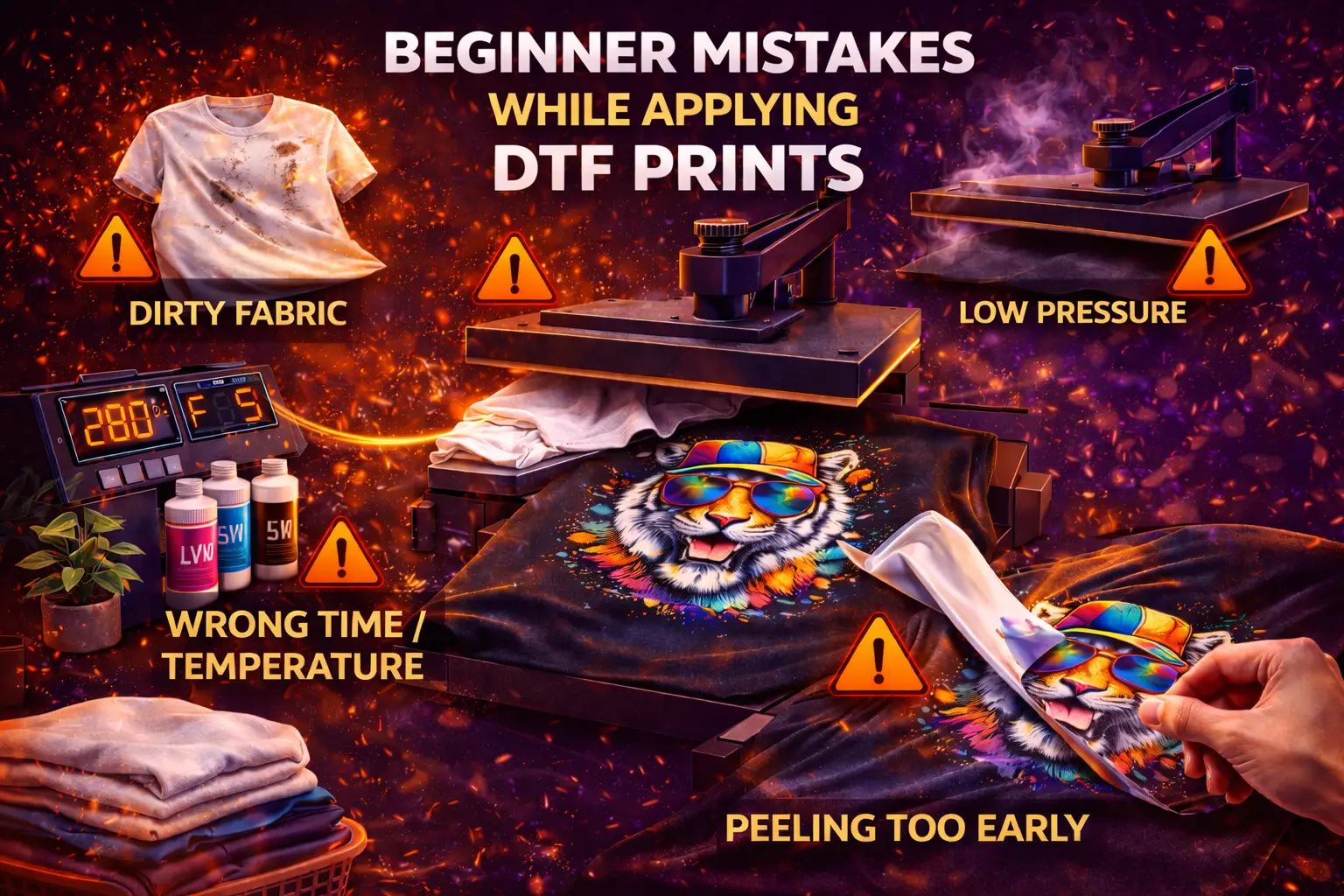
If you have just started using DTF transfers, you may feel excited after your first press. Then you wash the

Hi, I’m Shumail Ahmed, and I run Wise DTF Prints here in the UK. I work with custom prints every
If you work with heat presses long enough, this problem shows up sooner or later. You lift the press. The
Cracking is one of the most common issues people face with DTF prints. I see it often when customers first