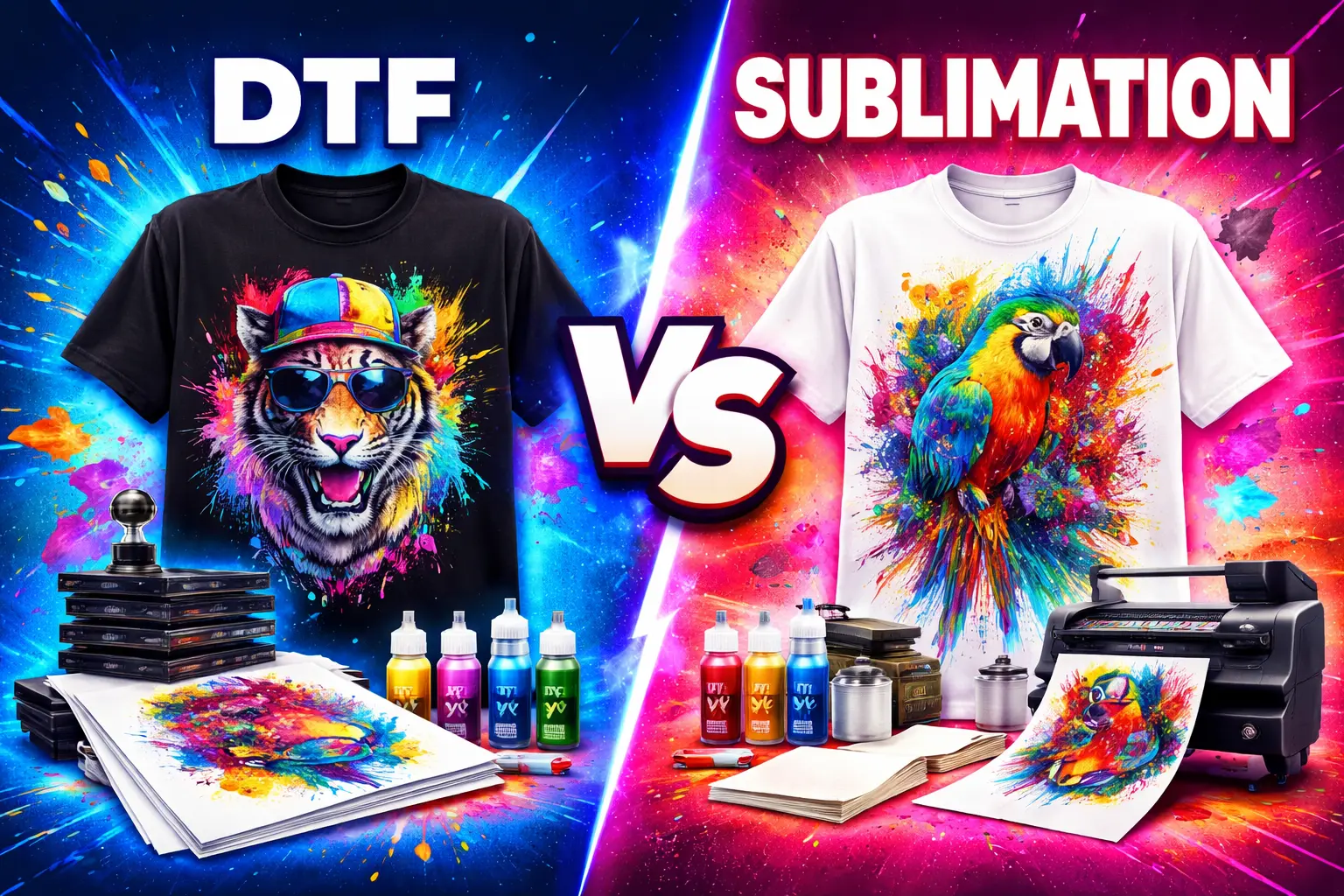
Hi, I’m Shumail Ahmed, and I run Wise DTF Prints here in the UK. I work with custom prints every day. I test them, press them, wash them, and sell them to real people. One question keeps coming up: Should I choose DTF or sublimation? Both methods look similar at first. Both use heat. Both use digital artwork. Yet the results feel very different once you wear the garment.
In this guide, I’ll explain the real difference between DTF and sublimation, based on hands-on work, not theory. I’ll keep it simple, honest, and valuable.
Understanding the Basics of Garment Printing Methods
Before we compare, let’s clarify what each method does.
What Is DTF Printing?
DTF stands for Direct-to-Film. You print your design onto a special film. You then press that design onto fabric using heat. The print sits on top of the fabric, not inside it.
DTF works on:
- Cotton
- Polyester
- Blends
- Dark or light fabrics
This makes DTF one of the most flexible custom apparel printing techniques today.
What Is Sublimation Printing?
Sublimation uses heat to turn ink into a gas. That gas bonds with polyester fibres. The print becomes part of the fabric itself.
Sublimation works only on:
- White or light fabrics
- Polyester or polyester-coated items
You cannot sublimate on cotton or dark garments.
DTF Printing vs Sublimation Printing: Core Difference
At the heart of this DTF printing vs sublimation printing debate lies one key point. DTF adds a layer. Sublimation changes the fabric. That single difference affects colour, feel, durability, and use cases.
Direct-to-Film vs Sublimation: Fabric Compatibility
Fabric choice matters more than most people realise.
DTF Fabric Range
DTF works on almost everything:
- T-shirts
- Hoodies
- Tote bags
- Caps
- Workwear
Dark fabrics pose no problem. DTF ink stays bold and clear. If you print for mixed orders, DTF saves time and stress.
Sublimation Fabric Limits
Sublimation needs polyester. It also needs a light base, print on cotton, and nothing sticks. Print on black, and the design disappears. This limits product choice.
Digital Printing on Fabric: Ink Behaviour
Ink type changes the final result more than most expect.
DTF Ink vs Sublimation Ink
DTF ink:
- Sits on top of fabric
- Needs white ink for opacity
- Keeps colours strong
Sublimation ink:
- Becomes part of the fabric
- Has no white ink
- Depends on fabric colour
This affects brightness and coverage.
Colour Vibrancy Differences You Can See
People often ask me which print looks brighter. Here’s the honest answer.
DTF Colour Vibrancy
DTF offers:
- Strong colour vibrancy retention
- Full opacity and coverage
- Sharp design clarity
Even small text stays clear. DTF prints look the same on black as they do on white.
Sublimation Colour Results
Sublimation prints feel smooth. However, colours depend on the fabric shade.
They look:
- Softer
- Lighter
- Less bold
For pastel designs, sublimation works well. For bold logos, it struggles.
Print Durability Comparison in Real Life
Durability matters once the garment enters daily use.
Wash Resistance
DTF prints:
- Handle regular washes well
- Stay intact if pressed correctly
Sublimation prints:
- Never peel
- Never crack
Both perform well here, with proper care.
Crack Resistance and Stretchability
DTF prints stretch with the fabric. High-quality film prevents cracking. Sublimation has no layer to crack. The design stretches naturally.
Fade Resistance and Print Longevity
DTF:
- Keeps colour with good ink and curing
- May fade slowly after heavy washing
Sublimation:
- Excellent fade resistance
- Colour lasts as long as the fabric
For long-term wear, both perform well when done right.
Soft Hand Feel: How the Print Feels
This point matters to many buyers.
DTF Feel
DTF has a soft hand feel, but you can still feel it. The better the film, the smoother the result.
Sublimation Feel
Sublimation feels like plain fabric. You cannot feel the print at all, this suits sportswear and lightweight tops.
Heat Transfer Printing Comparison: Ease of Use
Let’s talk about workflow.
DTF Process
DTF allows:
- Multi-layer printing capability
- White ink support
- Complex designs
You can store films and press later. If you sell transfers, DTF gives more control. You can explore ready-made options, such as the A4 DTF Transfer Sheetfor fast jobs.
Sublimation Process
Sublimation needs:
- Clean polyester
- Precise heat
- Immediate pressing
Mistakes waste garments.
Transfer Film vs Dye-Sublimation: Design Freedom
Design choice often decides the method.
DTF Design Freedom
DTF supports:
- Full colour images
- Bold logos
- Fine detail
- White ink
This suits brands, events, and workwear. Large formats also work well, such as the 58cm x 100cm DTF Transfer Sheet.
Sublimation Design Limits
Sublimation works best for:
- Light designs
- All-over prints
- Sports kits
White details vanish on light fabric.
Custom Apparel Printing Techniques: Cost Factors
Cost affects both sellers and buyers.
DTF Costs
DTF costs include:
- Film
- Ink
- Powder
- Pressing time
Yet it suits bulk and mixed orders. If you run volume jobs, bulk rolls like the custom metre DTF transfer roll reduce waste.
Sublimation Costs
Sublimation needs:
- Polyester garments
- Special paper
Costs stay low for the right product. They rise fast outside that range.
Which Method Suits Small Brands?
I get this question a lot.
If you:
- Print on many fabric types
- Offer dark garments
- Sell transfers
DTF fits better.
You can also build sheets for efficiency using DTF gang sheets.
If you:
- Focus on sportswear
- Use polyester only
- Want invisible prints
Sublimation works well.
Real Use Cases from My Work
Let me share what I see daily. DTF customers often want:
- Logos
- Bold art
- Short runs
Sublimation customers often want:
- Gym wear
- Team kits
- Light designs
Neither method is wrong. The job decides.
Quick Comparison Table
Here’s a clear summary.
- Fabric range: DTF wins
- Colour strength: DTF wins
- Soft feel: Sublimation wins
- Dark garments: DTF only
- Design clarity: DTF wins
- Fade resistance: Sublimation wins
Choosing the Right Method for Your Needs
Ask yourself:
- What fabric do I use?
- Do I need white ink?
- Do I want bold colours?
- Will I sell transfers?
Your answers point to the correct method. If you want flexibility, DTF gives freedom.
Final Thoughts from My Experience
I don’t push one method for everyone. I make the proper method for the job. DTF suits most businesses today because it adapts fast. Sublimation shines in specific lanes. If you need help choosing, I share updates and guides on Wisedtfprints.com. I print, test, and learn every week. That’s how I share advice that holds up after washing. If you found this helpful guide, you now know the real difference.
Read more: How to Fix Heat Press Marks on Fabric
Frequently Asked Question (FAQs)
Can I use the same design for both DTF and sublimation printing?
Yes, but the result will differ. DTF prints keep the design sharp and bold on any fabric colour. Sublimation changes the look because the ink blends with the fabric. Designs with white or dark shades work better with DTF.
Which printing method works better for small custom orders?
DTF works better for small and mixed orders. You can press one item or many without changing fabrics. Sublimation suits repeat jobs on polyester but limits flexibility for custom requests.
Does DTF printing feel heavy on clothing?
No, when pressed correctly, DTF feels soft and flexible. You may feel the print slightly, but it does not feel stiff. Good film and heat settings keep the garment comfortable for daily wear.
Why do sublimation prints look faded on some garments?
Sublimation ink has no white base. The fabric colour affects the final result. On off-white or light grey fabric, colours look softer. DTF avoids this issue because it provides full opacity and coverage.