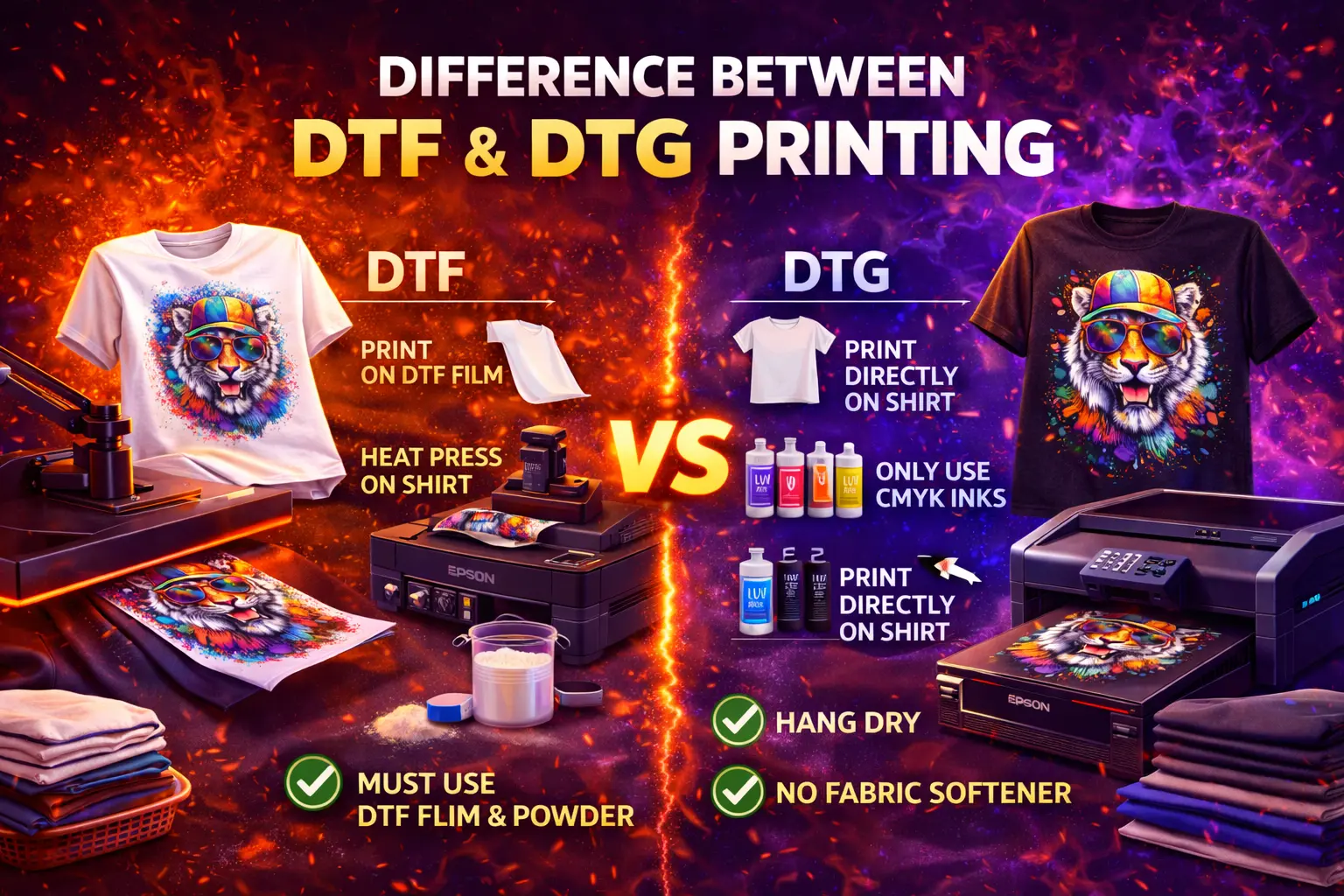
Difference Between DTF & DTG Printing
I run Wisedtfprints.com. Every week, people ask me one simple question. What is the real difference between DTF and DTG
If you print T-shirts or plan to start, you have likely asked this question: DTF printing vs vinyl printing – which one is better? I am Shumail Ahmed, founder of Wise DTF Prints. I work with DTF transfers every day for UK brands, startups, and clothing businesses. Clients often ask me about direct-to-film vs heat transfer vinyl. Some still use vinyl. Others move to DTF.
So today, I will give you a simple, honest comparison. No hype. Just real experience.
Vinyl printing uses HTV (heat transfer vinyl). The process looks like this:
The HTV application works well for bold logos and names. Sports shirts often use vinyl numbers. However, vinyl depends on solid colour sheets. That limits detailed artwork reproduction.
DTF (Direct-to-Film) is a digital transfer printing process.
Here is how it works:
The adhesive bonding method helps the ink stick well to the fabric. DTF works on cotton garment printing, polyester fabric application, blends, and even stretch fabric performance items. This makes DTF particularly suitable for complex artwork and modern custom apparel production.
Now, let us break down this comparison of garment decoration methods clearly.
DTF offers high detail and sharp edges. It prints tiny text and shading easily. Vinyl gives clean shapes but struggles with fine details. If you want a true print quality comparison, ask yourself: Does your design include gradients or small lines? DTF wins in detailed artwork reproduction.
DTF supports full-colour printing vs single-colour vinyl. It prints photos, shadows, and smooth blends. Vinyl works one colour at a time. You must layer different sheets to enable multi-colour design. This creates layering limitations in vinyl. Each layer adds thickness. So, in terms of colour vibrancy, DTF feels richer and more natural.
When customers touch the garment, they notice the texture. DTF gives a soft hand feel vs a thick vinyl feel. It feels smooth and flexible. Vinyl feels heavier. You can sense the edge of the design. For premium brands, this professional finish comparison matters a lot.
DTF works on:
Vinyl also works on many fabrics. However, stretch fabric performance is better with DTF. Vinyl may crack over time if stretched too much. So, in terms of fabric compatibility, DTF offers more flexibility.
Many people ask me, “Which lasts longer?” Both methods last if applied correctly. Heat press requirements matter. Temperature and pressure must stay correct. In my experience, DTF handles washing very well. The adhesive bonding method creates a strong grip. Vinyl also lasts, but thick layers may peel at the edges after heavy use. In a realistic print durability comparison, both perform well, but DTF feels more consistent.
Vinyl needs cutting and weeding. For simple names, that works fine. But for large orders, weeding takes time. DTF prints multiple designs at once. That improves bulk production efficiency. If you run a small business printing solution from home, DTF saves hours during big orders. In terms of production time, DTF wins for speed.
Vinyl machines cost less upfront. That attracts beginners. DTF printers cost more. However, long-term cost effectiveness changes the picture. With vinyl, labour time increases as orders grow. With DTF, you scale faster and reduce manual work. So, for on-demand apparel printing, DTF becomes more profitable over time.
Let us talk about the differences in design flexibility.
Vinyl works best for:
DTF handles:
If you want creative freedom, DTF offers more options.
As someone who runs Wise DTF Prints, I see trends clearly. More UK clothing brands move to DTF. Why?
Because customers expect:
DTF supports all of this. If you check our Shop, you will see options like custom sheets and metre rolls for different needs.
For example:
These solutions support bulk production efficiency and on-demand apparel printing.
If you run a small clothing brand in the UK, here is my honest advice.
Choose vinyl if:
Choose DTF if:
Most start with vinyl. Many switch to DTF after growth.
Let me share a few mistakes I see often.
Each mistake affects print quality comparison and customer trust. Always test your garments before bulk production.
So what is the simple answer? DTF printing vs vinyl printing depends on your goals. If you want speed, a wide colour range, a soft feel, and the freedom of modern design, DTF is the way to go. Suppose you print basic graphics and want a lower entry cost; vinyl is a good option. From my experience at Wisedtfprints.com, DTF suits most growing UK brands. It offers strong long-term cost-effectiveness and a better professional finish.
I built my business around DTF because I saw the shift early. Customers want vibrant prints, fast turnaround, and fabric flexibility. If you plan to grow, start learning DTF now. Even if you begin small, the future of custom apparel printing techniques clearly favours digital transfer printing.
I share honest advice because I work in this field daily. I test fabrics. I check the wash results. I speak to real clothing brands every week. That practical insight shapes this comparison.
Read more: DTF vs Screen Printing – Which Is Better
| Feature | DTF Printing | Vinyl Printing |
| Colour Range | Full-colour | Single colour per layer |
| Texture | Soft | Thick |
| Detail | High detail | Limited |
| Speed | Fast for bulk | Slower for large orders |
| Stretch | Flexible | May crack |
| Best For | Scalable brands | Simple designs |
If you still feel unsure, ask yourself one simple question: Do you want to grow your apparel brand, or just print a few shirts? Your answer will guide your choice. If you need help, I am always happy to share advice.
In many cases, yes. If you print logos with many colours or fine details, DTF works better. It saves time and gives a cleaner result. Vinyl works well for simple names and numbers. But when orders grow, cutting and weeding vinyl takes more time. If you want to grow your brand, DTF often makes more sense.
Yes, it usually feels softer. DTF prints feel smooth and light on the fabric. Vinyl feels thicker, especially if you layer colours. When people wear the shirt, they can feel the difference. If comfort matters for your brand, DTF gives a better feel.
Both can last a long time if you press them the right way. You must use the correct heat and pressure. From my experience, DTF handles stretch and washing very well. Vinyl also lasts, but thick designs may lift at the edges after many washes. Good pressing and proper washing care help both methods last longer.

I run Wisedtfprints.com. Every week, people ask me one simple question. What is the real difference between DTF and DTG
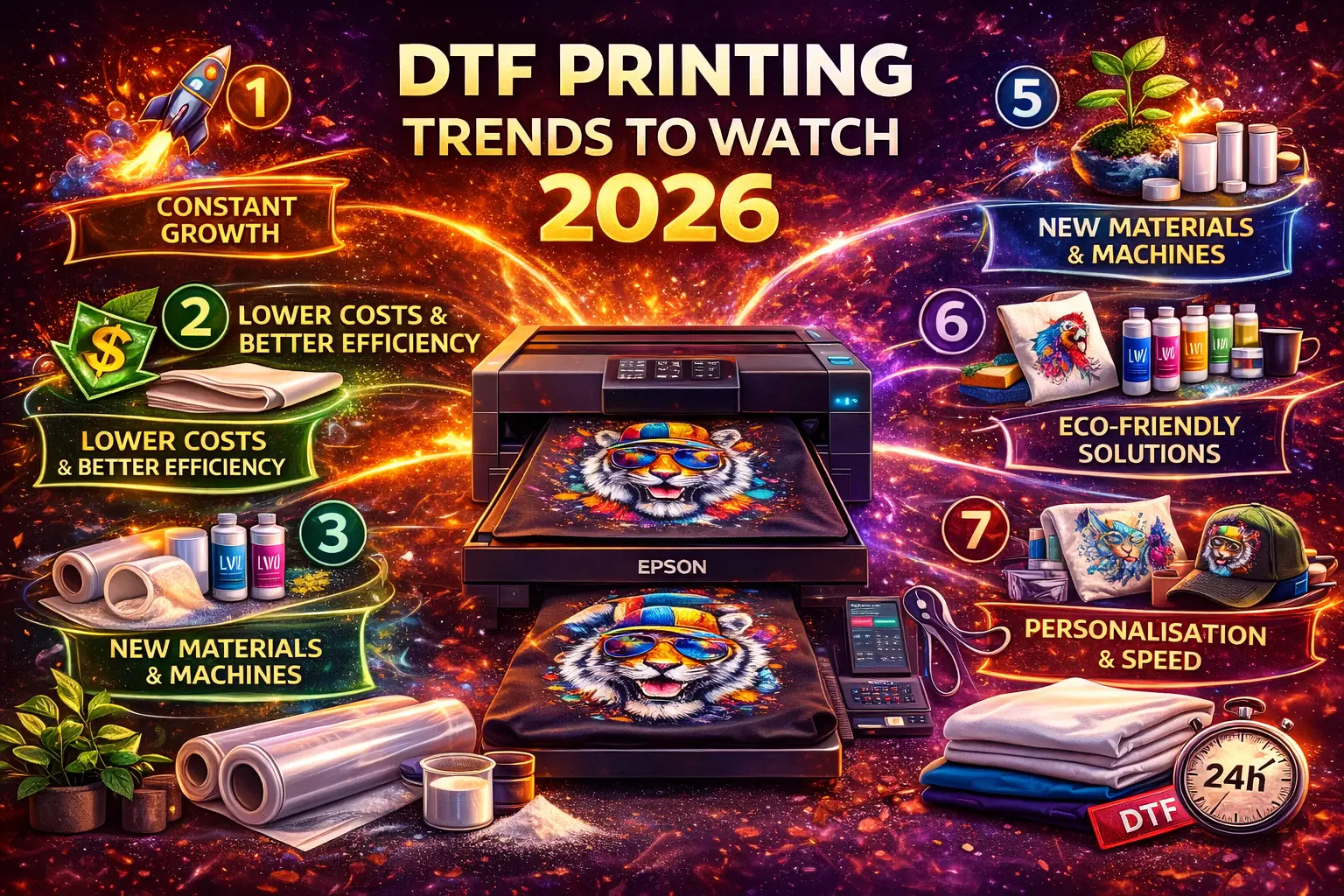
My name is Shumail Ahmed, and I run Wisedtfprints.com here in the UK. Every day, I work with DTF transfers
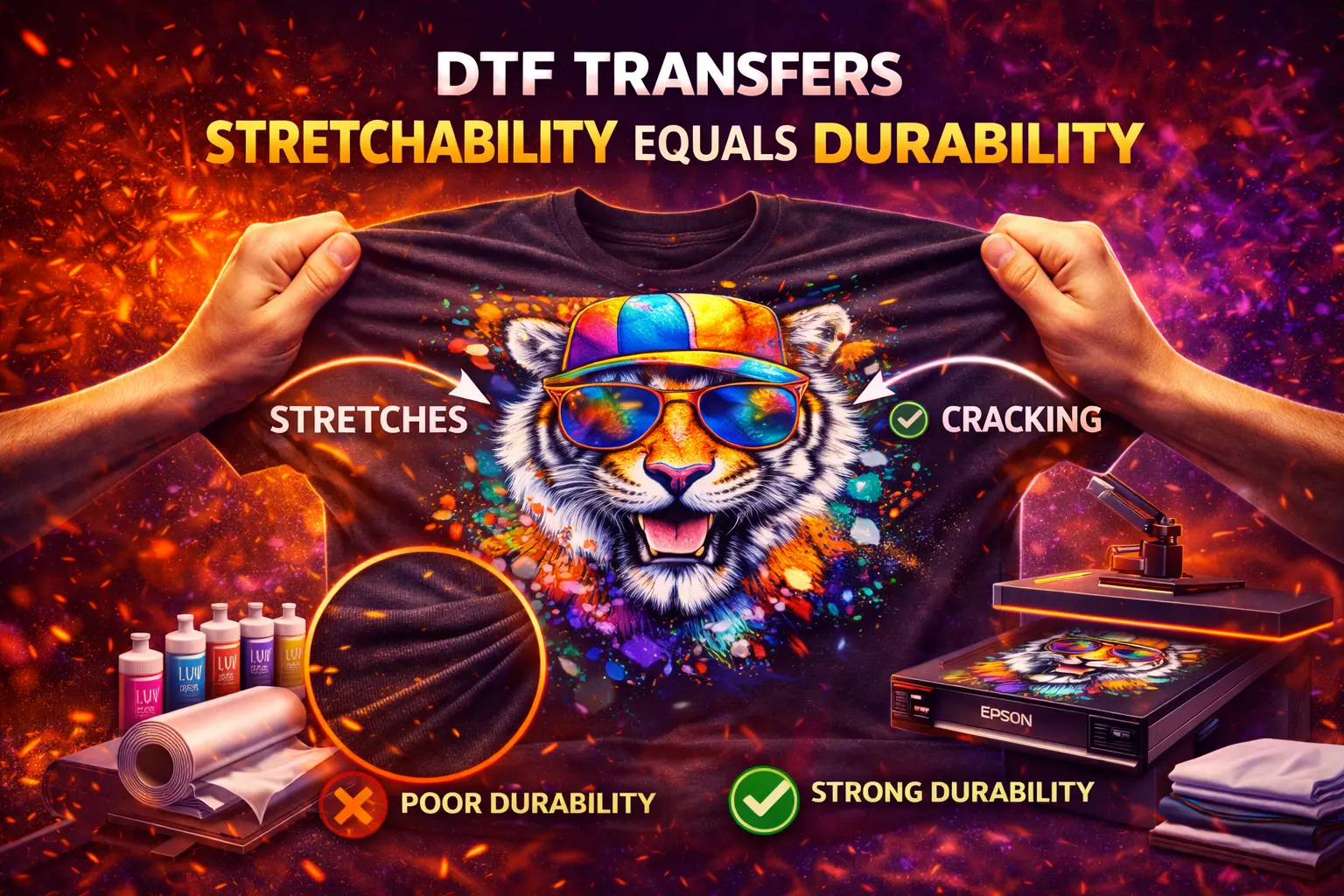
When people ask me about DTF printing, one question comes up again and again. “Do DTF transfers stretch without breaking?”
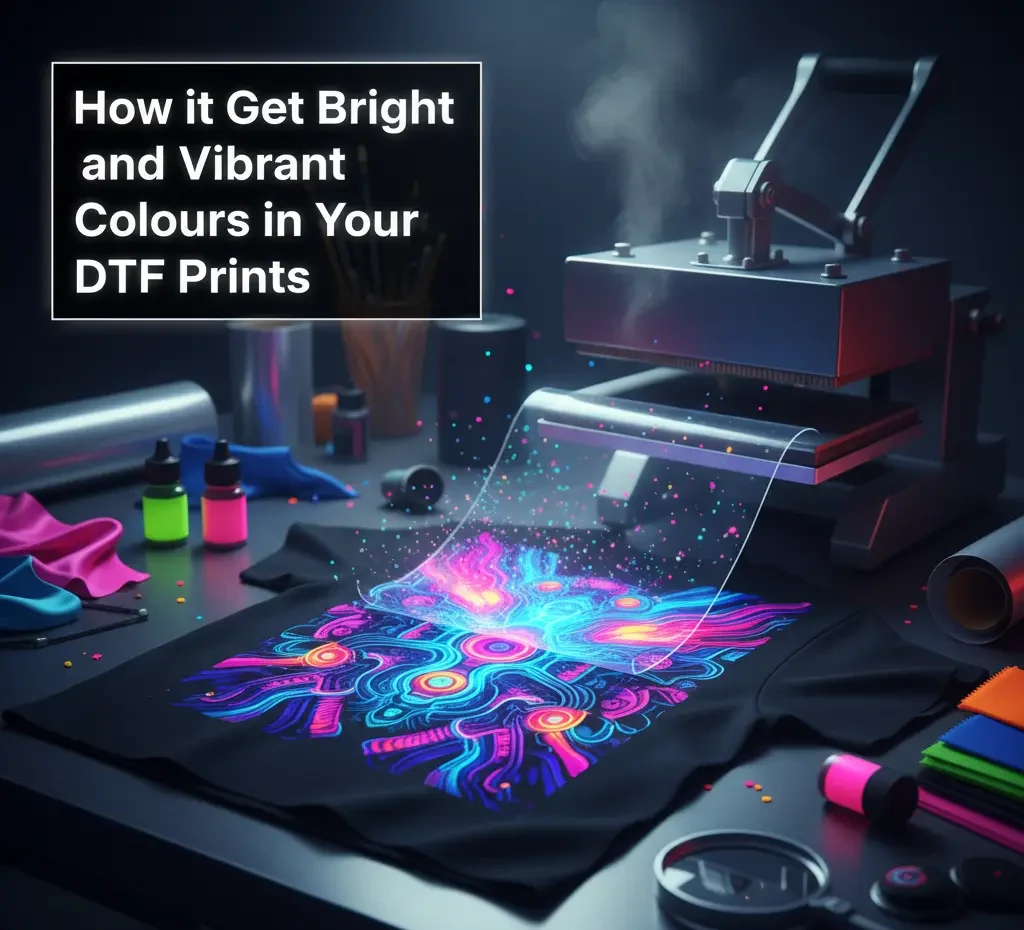
As someone who has spent years perfecting DTF printing, I can tell you that vibrant colour doesn’t happen by chance.
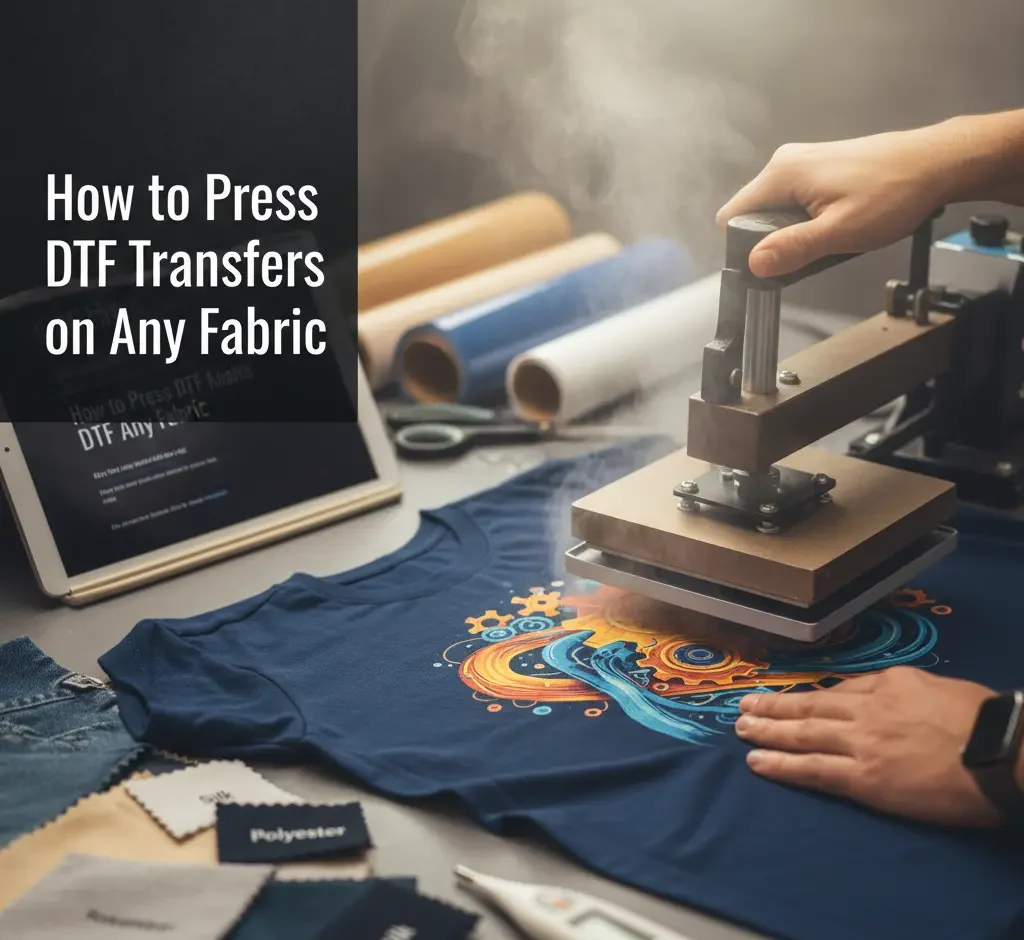
When I first started printing with DTF (Direct-to-Film) technology, the biggest challenge was consistency. Every fabric behaved differently under the